Context Cards
Pinned delivery for the ctx-cards script and its term packs. The Worker proxies the repository at a tagged release rather than holding copies, so cutting a tag publishes it.
What it serves
ctx-cards reads schema.org DefinedTermSet markup from a page, scans the prose for those terms, and attaches contextual cards on hover or tap. This service delivers the script and its packs from a domain I control.
There is no separate publishing step. The Worker fetches from the repository at a pinned ref on a cold cache, so the repository stays the single source of truth and a release cannot drift from what is served.
URL shape
https://cdn.jakelabate.com/context-cards/<tag>/dist/ctx.min.js
https://cdn.jakelabate.com/context-cards/<tag>/packs/<pack>.json
https://cdn.jakelabate.com/context-cards/<tag>/sites/<site>.json
The script derives its pack URLs from its own src by swapping /dist/<file> for /packs, so a pinned script tag pins its packs to the same release automatically. Nothing extra to configure, and no way for a script and its data to end up on different versions.
The script tag
<script src="https://cdn.jakelabate.com/context-cards/v0.10.0/dist/ctx.min.js"
        integrity="sha384-..."
        crossorigin="anonymous"
        data-packs="seo-core"
        data-style="paper"
        defer></script>
Subresource integrity is worth using here and costs nothing. The bytes at a tag never change, so the hash never changes, and a browser will refuse the script outright rather than execute something unexpected. The current value lives at dist/ctx.min.js.sri in the repository.
What is deliberately restricted
Two limits matter more than the proxying itself.
- Only
dist/,packs/andsites/are reachable. Without a directory allowlist this would serve any file in the repository from my domain under a permissive CORS header. - A ref must be a
vN.N.Ntag ormain. Without it, any commit in history would be addressable, which is an open proxy with extra steps.
Paths containing .. or characters outside [\w.\-/] are rejected separately. Tagged paths are immutable and cached for a year; main is allowed for testing with a five minute TTL and is not stored in the edge cache.
Releases
Tag the repository and the new version is live at the new path immediately, because tags resolve on first request. Old tags keep working indefinitely, which is what lets a page pin a version and not be moved off it by someone else's deploy.
Card kinds
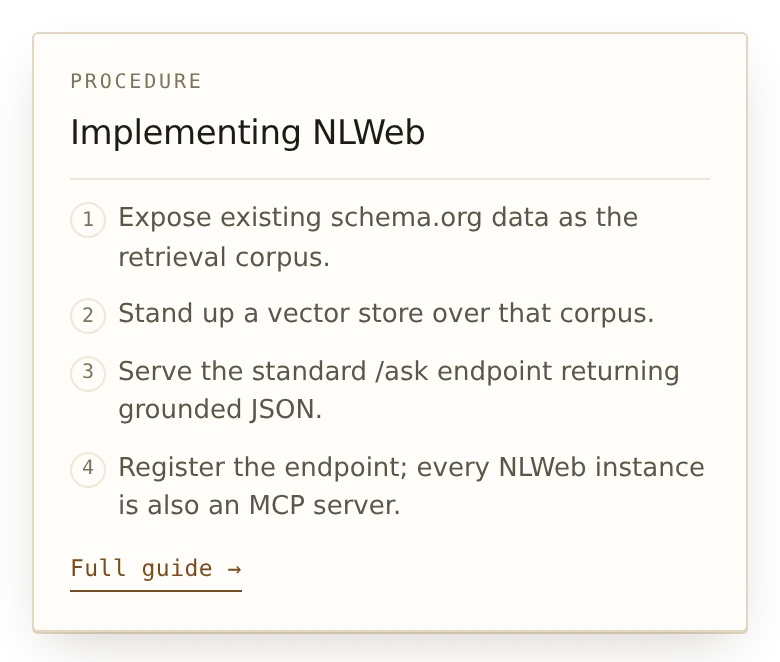
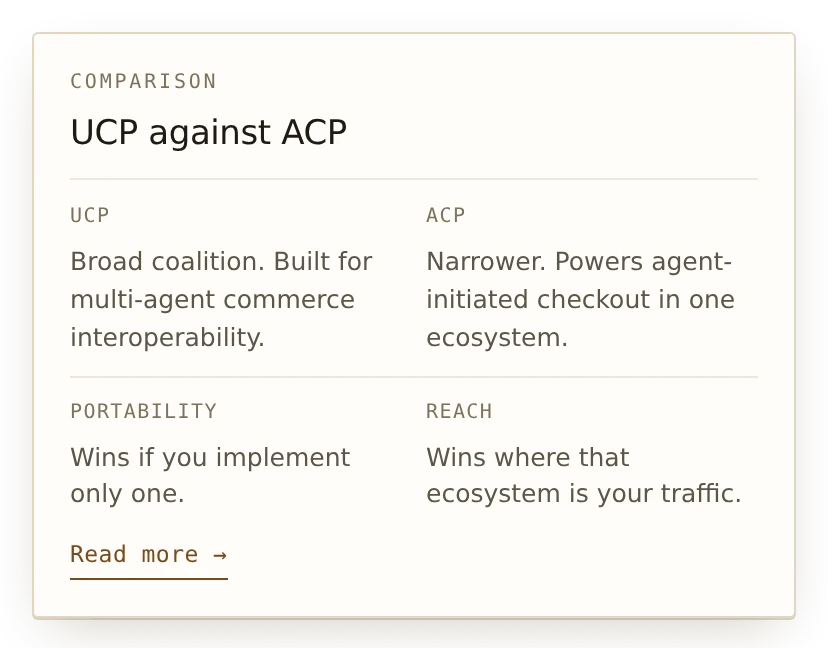
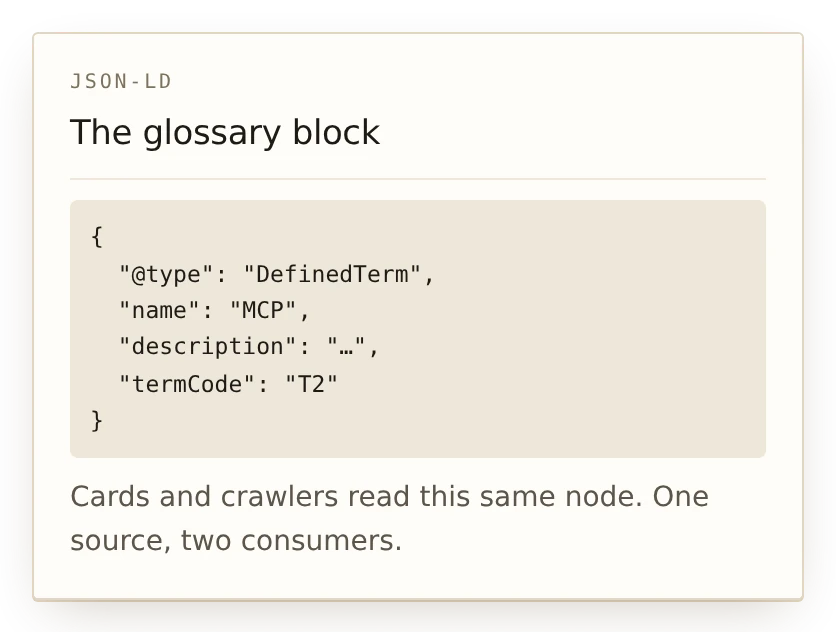
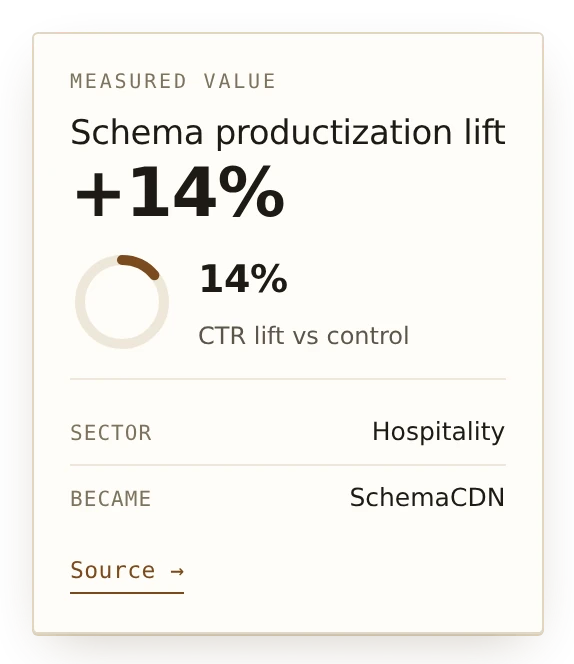
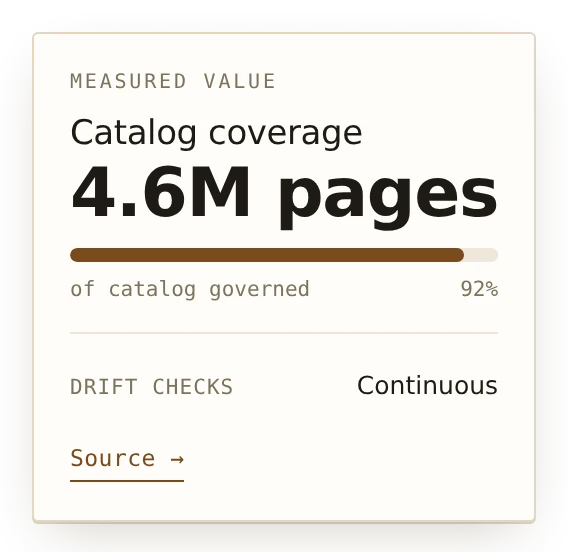
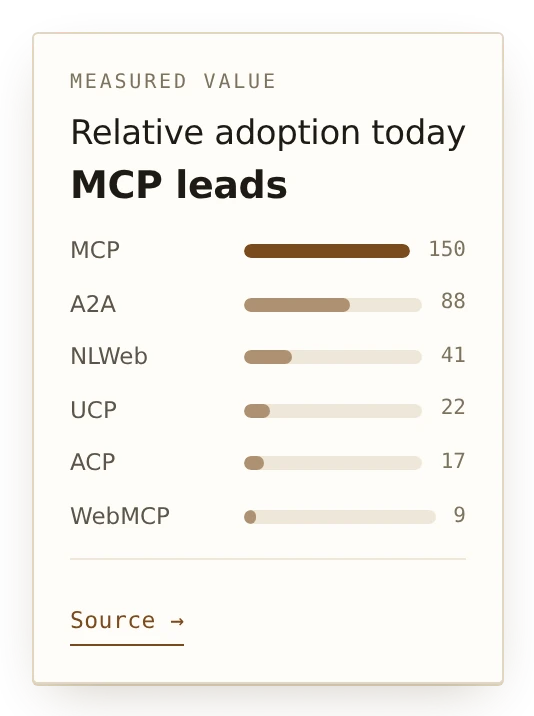
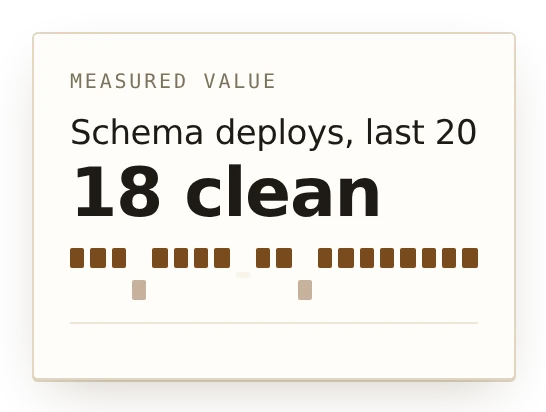
Every card shares one shell, one tail, one entrance and one dismiss behaviour. Only the body changes, set by ctx.kind on the term. Cards below are captured from the rendered component, not redrawn.





Charts
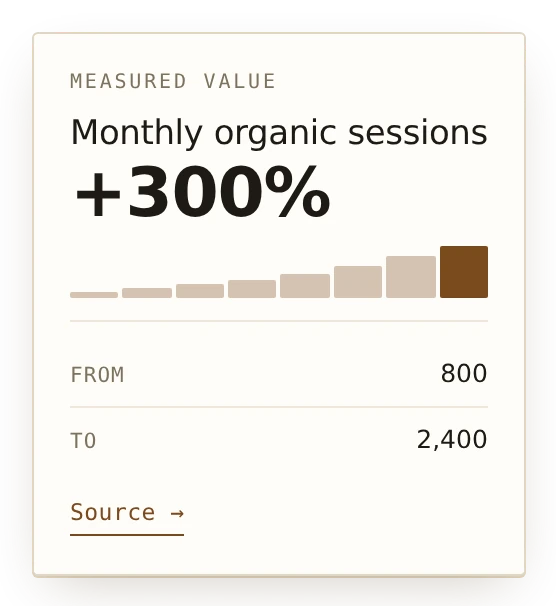
Any kind can carry ctx.chart. These are sparklines rather than charts: no axes, no tooltips, nothing to interrogate. A card that disappears on mouse-out is the wrong container for a number that needs studying, so when one does, the card's job is to link out to it.



Live on this page
This page loads ctx-cards from the endpoint it documents. The terms below are marked in the prose above and throughout this page. Hover one on a desktop, or tap it on a phone, and the card is rendered from the DefinedTermSet markup in this page's own head.
- DefinedTermSet, the schema.org type the script reads.
- subresource integrity, the hash that pins the bytes.
- immutable, the caching guarantee a tagged path makes.
- edge cache, where a tagged response lives after the first request.
- CORS, the header that decides who may read the response.
Nothing is sent anywhere to make that work. The script reads the markup already in the document, scans the prose in the browser, and no page text leaves the page. The only network requests it makes are for the script itself and any term packs, both from this CDN.
Source
The script and the delivery Worker live in the same repository, which is what keeps a release and the thing serving it from drifting apart.